
Illinois HB 1700 Brings Greater Certainty to Renewable Energy Development

Illinois continues to advance its clean energy goals with the passage of House Bill 1700 (HB 1700). The legislation could create a more predictable path for renewable energy projects across the state.
Governor JB Pritzker signed HB 1700 into law on June 26, 2026. The bill makes changes to the state’s Clean and Reliable Grid Affordability Act. It also addresses issues affecting the development of solar, energy storage and other renewable energy projects in Illinois.
For renewable energy developers, one key benefit is greater certainty around local permitting and zoning.
What Does Illinois HB 1700 Mean for Solar Development?
Renewable energy projects require years of planning and investment. Developers must evaluate sites, complete permitting and work through interconnection requirements. Local zoning and approval processes can add further uncertainty.
HB 1700 provides additional regulatory support for certain renewable energy projects facing local permitting challenges. The legislation also gives the Illinois Commerce Commission (ICC) additional authority in specific situations involving local governments and renewable energy project siting.
These changes could create a more consistent framework for developers. This includes developers working on community solar, solar farms and energy storage projects in Illinois.
Greater Certainty for Renewable Energy Developers
Clean Footprint Vice President of Real Estate and Strategy Adam Cole spoke with New Project Media about the legislation. Cole said HB 1700 provides important support for developers facing zoning and permitting challenges.
Illinois established statewide renewable energy siting standards in 2023. These standards created greater consistency for renewable energy projects in unincorporated county areas.
HB 1700 builds on that framework. The legislation provides additional support when compliant renewable energy projects face certain local permitting barriers. This includes prolonged delays and outright restrictions in some circumstances.
Greater regulatory certainty can benefit the entire development process. It can help developers evaluate opportunities and make long-term investments. It can also provide greater confidence as projects move toward financing and construction.
Local Community Engagement Remains Important
HB 1700 provides an additional pathway when certain local permitting challenges arise. However, community engagement remains an important part of responsible solar development.
Clean Footprint understands the importance of working with landowners and local communities. We also recognize the value of working closely with local governments.
Open communication helps explain the benefits of renewable energy projects. It also gives communities an opportunity to ask questions and share concerns.
A predictable permitting process and meaningful local engagement can work together. Both are important to responsible renewable energy development.
Supporting Illinois’ Clean Energy Future
Illinois has established ambitious clean energy goals. Continued development of community solar and Solar + Storage projects will help expand access to renewable energy.
HB 1700 could help qualified renewable energy projects move through development more efficiently. Greater certainty may also encourage continued investment in Illinois solar and energy storage.
For Clean Footprint, the legislation represents a positive step for renewable energy development in Illinois. A clearer process can help developers continue investing in new projects.
It can also support the development of renewable energy resources in communities throughout the state.
As Illinois continues implementing its clean energy policies, a clear development process will remain important. Predictability can support developers, landowners and local communities.
Together, these efforts can help Illinois continue building a stronger clean energy future.
Learn More
This article was informed by an interview by Michelle France, originally published by New Project Media. The interview featured perspectives from Clean Footprint Vice President of Real Estate and Strategy Adam Cole and SunVest Solar CEO Bram Walters.
RE+ Midwest 2026
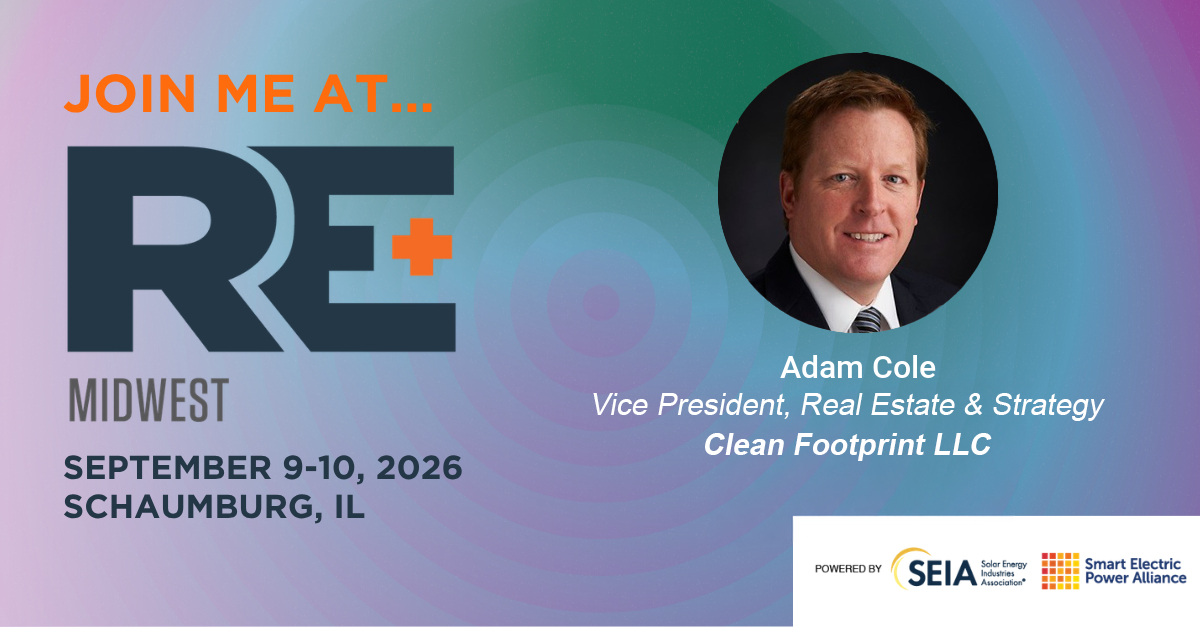
We are excited to announce that Adam Cole will be attending the RE+ Midwest 2026!
Join us along with hundreds of clean energy professionals as we connect with developers, utilities, landowners, consultants, and industry partners who are helping advance the future of renewable energy.
If you’ll be attending, stop by and say hello or reach out to schedule a meeting. We look forward to seeing you in Schaumburg!
#CleanFootprint #REPlusMW #CleanEnergy #RenewableEnergy
Iroquois County Conditional Use Permit
Clean Footprint, LLC, on behalf of its project subsidiary company CF IL Solar N 2200 East Road, Martinton LLC, has been approved for a Conditional Use Permit from the Iroquois County Board of Supervisors to develop a community-focused Solar + Storage project near Martinton, Illinois.
The project is planned as a 1.30 MWac community solar farm, paired with a 4-hour energy storage system on Ameren Illinois’ distribution grid. This project will bring reliable, affordable clean energy to Iroquois County residents, while strengthening the community’s electrical grid.
Clean Footprint appreciates the engagement of Iroquois County staff, community leaders, and stakeholders throughout the permitting process and looks forward to working with our project and community partners as the development progresses toward construction and operation.
IESNA Midwest
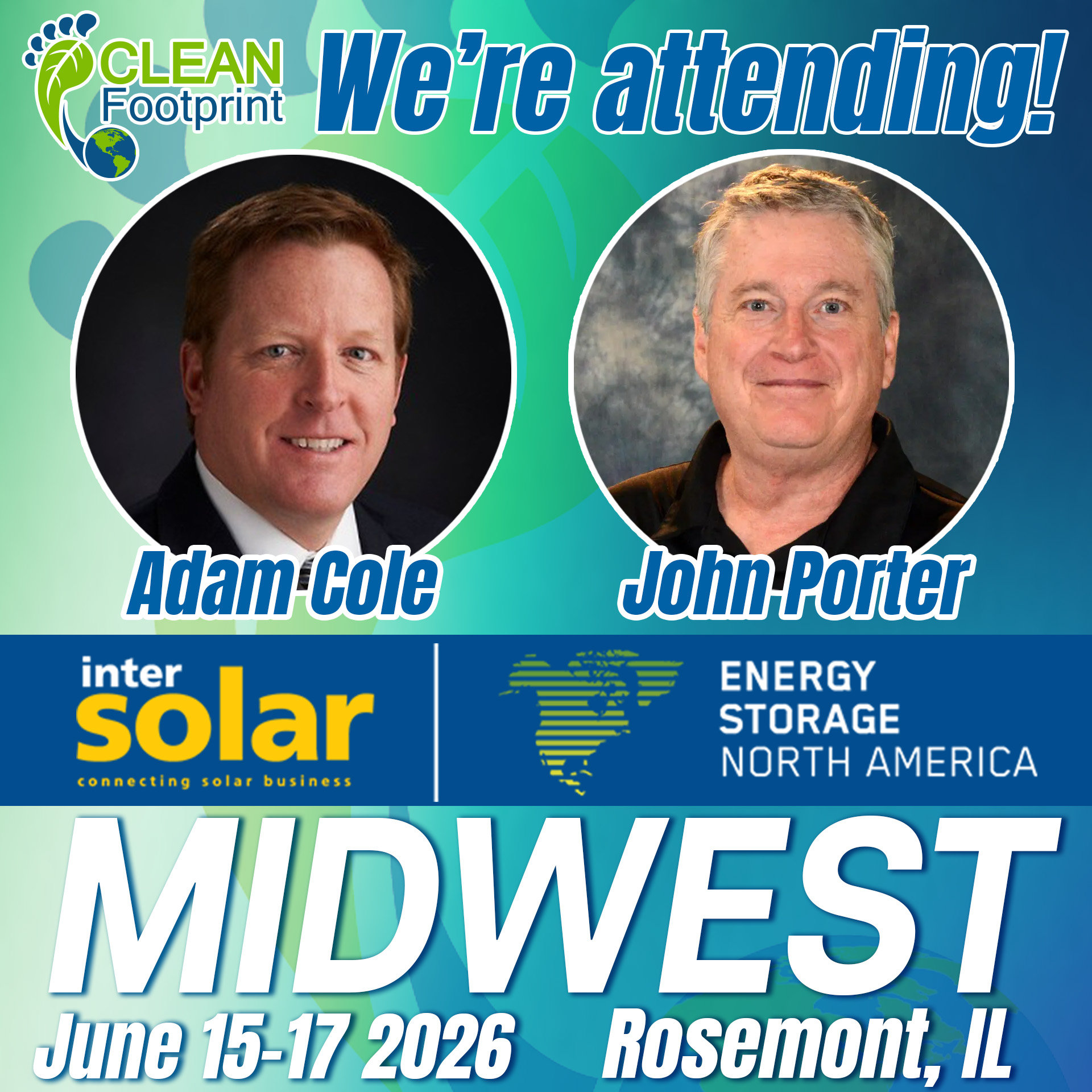
Clean Footprint was excited to attend Intersolar & Energy Storage North America Midwest!
Our team members, Adam Cole and John Porter, had the opportunity to connect with developers, IPPs, policy leaders, suppliers, and consultants who are driving the growth of solar and energy storage across the region.
The event provided a valuable opportunity to discuss our sale-ready Community Solar portfolio and explore opportunities within our pre-NTP development pipeline. We appreciated the many conversations and connections made throughout the conference and look forward to continuing those discussions in the future.